Wednesday, 10 February 2010

The 11 Best Performing Stocks of the 2000’s

Medifast (MED)

(Floodkoff)

With 2009 behind us and a new decade ahead, savvy investors would do well to study which stocks turned in the strongest performances in the last decade. Throughout the tech crash, 9/11, Hurricane Katrina and the global financial meltdown, a handful of resilient stocks not only held their own amidst adversity, but actually outperformed the entire market from 1999 to the present. Various financial publications have tallied up the winners. Today, we’ll explore how these companies maintained their high share prices throughout the 2000’s, including acquisitions, market forces and well-timed product launches.

Long one of the most lucrative markets out there, the diet and weight loss sector produced the 2000’s top stock in Medifast. According to Motley Fool, Medifast posted an eye-popping 9,244% growth rate from 2000-2009 – over 1,300% more than the second best performing stock during the same time frame. The bulk of Medifast’s success appears to have stemmed from the Medifast diet, a low-fat, low-carb diet plan focused on calorie restriction. Given the soaring popularity of diet programs like Atkins and Weight Watchers during the 2000’s, it is no wonder that Medifast’s products (which span five separate subsidiaries) performed so well.

Green Mountain Coffee Roasters (GMCR)

(Alex-S)

The 2000’s were a decade for the ages for caffeine juggernaut Green Mountain. BusinessInsider reports a whopping 7,895% growth rate for the decade, and Vermont’s Burlington Free Press said it all: “…if you bought stock in Green Mountain Coffee Roasters a decade ago, you’re sitting pretty today.” Despite trading at just $1 per share in 2000, Green Mountain propelled itself to the heights of stock market dominance largely on the strength of its, “…2006 decision to buy out Wakefield, Mass.-based Keurig Inc., the company now synonymous with single cup brewing” for a cool $104 million. The deal has made a prophet out of CEO Robert Stiller, who insisted in 2001 that people will still buy good coffee during tough times. Sure enough, Green Mountain is now trading at over $70 per share, with K-Cup shipments up 63% over 2008.

Hansen Natural (HANS)

(Israelavila)

Another beverage-focused company, Hansen Natural, was the third-best performing stock of the 2000’s. In posting a 6,504% growth rate since 2000, Hansen demonstrated the power of risk management as a growth strategy. Unlike many companies in this space, Hansen is a holding company, carrying no operating businesses of its own other than direct, wholly-owned subsidiaries. In other words, it does not itself produce goods. This low risk/high reward arrangement has enabled Hansen to succeed brilliantly from about 2005 until the present. The company specializes in distributing and marketing energy drinks (including the ultra-popular Monster energy drink), non-carbonated iced teas and fruit smoothies.

Bally Technologies (BYI)

(dlr2008)

The gambling industry has taken its lumps since the recession began, but Bally Technologies has rebounded nicely after a dip in share price during 2008. Much of Bally’s 6,395% growth during the 2000’s owes to the company’s shrewd acquisitions of Casino Marketplace, MindPlay and Advanced Casino Systems Corporation, which allowed Bally’s to expand its slot machine technology dominance. 2004’s acquisition of Sierra Design Group cemented Bally’s direction as a gaming technology company.While Bally’s had plenty of opportunities to slow down during the last decade, its philosophy of continuously releasing new products has proved to be an effective one.

Southwestern Energy Co (SWN)

(AndrewCParnell)

Southwestern Energy is proof positive that neither disasters nor terrorist attacks, nor recessions can hold a truly productive company down. The natural gas and oil producer ended 1999 trading at a paltry $0.82 per share, but has risen all the way to $47.45 as of December 2009 – a 5,684% change in share price and a 5,781% total return for the decade. And don’t think for a moment that Southwestern is tip-toeing into 2010 because of the recession. According to BusinessWeek, the company has, “…increased its 2010 capital capital budget and projected a 36 percent growth in production, as the company looks to expand its exploration and production activity in the coming year.” Clues explaining the prolonged success of the company can be found in the very same article, where CEO Steve Mueller opines that Southwestern’s, “…low cost operations, position in the Fayetteville Shale and financial flexibility”, will continue to propel the organization.

Deckers Outdoor (DECK)

(UggBoy)

Sometimes all it takes is one mega-successful product to send the whole company’s share price skyrocketing. This appears to be the case with Decker’s Outdoor, whose 3,669% growth from 2000-2009 coincides with the soaring popularity of UGG boots. While the Los Angeles Times writes that the late 1990’s spike in demand, “…should have been just another fad”, the company had nevertheless, “…sold more than $212 million in products” by the third quarter of 2009. Reflecting further on the driving forces of Decker Outdoor’s rise to prominence, the LA Times credits the company’s late-90’s decision to switch, “…the primary focus of the footwear company to the international market” as the catalyst, concluding that, “…what stared as a small enterprise to clad the feet of Australian surfers now seems intent on world domination.”

Amedisys (AMED)

(Sam Blackman)

Plain and simple, Amedisys has ridden the seemingly bottomless pit of taxpayer money for Medicare to a spot on the best performing stocks of the 2000’s list. As a provider of home health services to the, “…chronic, co-morbid, aging American population”, over 85% of Amedisys’ 3,669.2% growth from 2000-2009 has come from Medicare, according to BusinessInsider. It appears this is a company that was in the right place at the right time: operating amidst a rapidly swelling aging population and a government program no politician will dare to starve for funds. Skeptics need look no further than this graph showing Amedisys’ share price hovering below $20 per share until then-president Bush’s medicare reform became law in late 2003.

Jos. A. Bank Clothiers (JOSB)

(Rogerimp)

Anyone who listens to talk radio has heard adverisements for Jos. A. Bank, a designer, retailer and marketer of mens clothing. BusinessInsider recently named the company in its list of the best performing stocks of the decade, citing Jos. A. Bank’s 3,419% growth from 2000 to the present. This stock did not begin to really heat up until late in 2003, when it began an ongoing and rarely interrupted climb in share price. Perhaps most interesting of all is the fact that Jos. A. Bank has performed better during 2009, in the teeth of the recession, that at any other time during the 2000’s. Perhaps the rising unemployment rate has inspired job seekers to put their best foot forward by stocking up on new professional clothing.

Terra Nitrogen (TNH)

(ShandChem)

Sometimes the way to achieve a high share price is to satisfy a high-demand niche better than anyone else. Such was the road taken by Terra Nitrogen, a nitrogen fertilizer producer and distributed that posted 3,611% growth from 2000-2009. Under the guidance of CEO Michael Bennett since 1998, Terra has averaged a 70% return on capital since 2006. According to Motley Fool, continued deterioration of soil has elevated demand for Terra’s fertilizer products. There’s no mystery as to Terra’s success. As one Motley commenter succinctly puts it, “…people need to eat.”

XTO Energy Inc. (XTO)

(MikeBaird)

CNBC’s Best & Worst Stocks of the Decade gave high marks to XTO Energy, which parlayed two big late-2000’s acquisitions into a $31 billion sale to Exxon Mobil this year and 3,461% in returns during the decade. XTO spent $2.5 billion to acquire more than 1 trillion cubic feet of oil and gas reserves in the Rocky Mountains, Texas and southern Louisiana from Dominion Resources in 2007. A year later, XTOforked over $4.2 billion for Hunt Petroleum Corporation in a move that bolstered the company into the position of largest natural gas producer in the U.S. by the second quarter of 2009.

DaVita Inc. (DVA)

(iLoveButter)

On December 31, 1999, Davita Inc. closed at less than $5 per share. As of December 18, 2009, however, DaVita (one of the largest kidney care companies in the U.S.) had leaped to $59.60, earning its place as one of the best stocks of the decade. All told, this represents a 1,236% in share price, good for a total 1999-2009 return of over 1,200%. Naturally, a decade of such robust performance demands explanation. According to Fortune, DaVita appears to owe much of its success this decade to exemplary corporate leadership. The company was named one of Fortune’s 25 Top Companies For Leaders after being, “…selected and ranked by an expert panel of independent judges based on strength of leadership practices and culture, examples of leader development on a global scale, impact of leadership in communities in which they operate, business performance and company reputation.”

Quote of the day

Live as if everything you do will eventually be known. -- Hugh Prather

Green Energy Live set to offer superb invest opportunities


Green Energy Live expected to offer excellent opportunities for investors in 2010 due to new government regulations and consumer demands

According to new industry reports, the Biomass-to-Energy market is expected to achieve significant growth this year. Since being included in the Energy Independence and Security Act of 2007, it has been one of the strongest potential future energy sources. By 2022, 36 billion gallons of fuel must be made of "renewable" fuels. With the increase in fuel consumption, biomass fuel usage is expected to grow 30% into 2012, with the United States leading the way with 19% of the usage of biofuel. Biomass fuel is currently the 4th largest source of energy used in the world today.
Biomass development is needed to ensure a viable alternative to traditional fossil fuels.

The Federal Department of Energy has recently set a goal that 5% of the nation's power, 20% of its transportation and 25% of its chemicals should be supplied from biomass by 2030. Biomass supply logistics will be the largest hurdle in meeting these federally set goals. Green Energy Live will leverage its proprietary gasification technology to help develop and convert livestock waste into clean burning energy.


Furthermore as a result of the global economic crisis, the world is focussing on the effects of global warming and the need to develop long-lasting, clean, but affordable energy sources.


Consequently now is the perfect time to invest in Green Energy Life excellently placed to engage with emerging opportunities, create new ones and position itself at the forefront of the new wave of clean energy solutions, which will guarantee future growth and prosperity. Its is a great time for regional investors to commit capital to the energy sector, Green Energy Life is an emerging business with ever-increasing populations and demands for fuel, this is definitely a sector set for growth for many years to come.


The world has embraced technologies that offer the opportunity for a cleaner planet and healthier people and many companies have emerged to lead this movement, don’t get left behind this evolution.


Karen Clark, President/CEO of Green Energy Live, commented: "Having closed out a very successful year, we are thrilled to see investment in and demand for green energy technology further increase. Green Energy Live intends to become a leading provider of sustainable biowaste-to-energy conversion solutions for America's livestock farmers and ranchers."

United States Oil & Gas Corporation are on the right track

Del Mar, CA – United States Oil & Gas Corporation (USOG) is focused on acquiring and growing domestic oil and gas services companies while ensuring minimal environmental footprint with the later becoming increasing important as experts stress the need to capitalize on increased stability in the Oil & Gas business, pledging a realignment of policies for a robust future and a collective strategy to recover from the setbacks of the previous years and the need for technology as a driver for future oil and gas initiatives.

There is an increased need for companies to achieve sustainability and build a steadier, safer and productive market for the oil and gas sector like USOG is currently doing.

USOG is on track as it is a conscientious holding company with subsidiaries focused in the development of environmentally responsible technologies. They develop drilling technology that creates a smaller ecological footprint and to grow through the acquisition of existing profitable oil and gas drilling and service companies.

The company aim to make the most of global and regional oil and gas sector opportunities against the backdrop of economic conditions in the respective areas.


You can follow StockSource.us reports on Twitter and Facebook

StockSource.us

Tuesday, 9 February 2010

14 Coal Stocks to Consider Buying Now

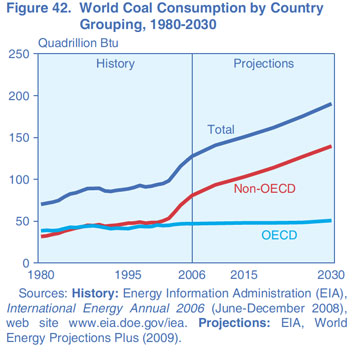
Coal is the main source of electricity generation in many countries. In addition, coal is used in industrial and other sectors. The global consumption of coal is projected to increase each year by over 1.5% annually.

Saturday Australia signed a $60B deal to supply coal to China for the next 20 years. As part of the contract, each year Australia will ship 30 million tonnes of coal to energy-hungry China. It must be noted that China is the largest consumer of coal in the world and relies on coal to meet 70% of its energy needs.The deal is the largest single export deal ever signed by Australia. Thousands of jobs are expected to be created as a result of this contract.

Click to enlarge:

world-coal-use-projection

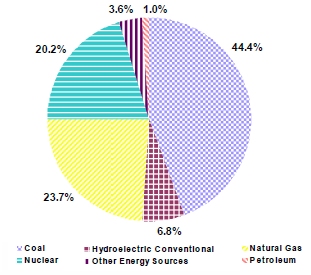
In the U.S., coal-fired plants accounted for 44.4% of the country’s power generation thru October last year.

Click to enlarge:

us-power-by-source

From the U.S. Energy Information Administration site:

Coal use in the United States totaled 22.5 quadrillion Btu in 2006—92 percent of total coal use in North America and 48 percent of the OECD total. U.S. coal demand rises to 26.6 quadrillion Btu in 2030 in theIEO2009 reference case. The United States has substantial coal reserves and relies heavily on coal for electricity generation, a position that continues in the projections. Coal’s share of total U.S. electricity generation (including electricity produced at combined heat and power plants in the industrial and commercial sectors) declines from 49 percent in 2006 to 47 percent in 2030.

14 Coal stocks that trade on the New York Stock Exchange are listed below:

S. No.CompanyTicker
1Arch Coal, Inc.ACI
2Alpha Natural Resources, Inc.ANR
3Peabody Energy CorporationBTU
4CONSOL Energy Inc.CNX
5Evergreen Energy Inc.EEE
6Massey Energy CompanyMEE
7Natural Resource Partners LPNRP
8Penn Virginia ResourcesPVR
9Walter Energy, Inc.WLT
10Yanzhou coal mining Co. (ADR)YZC
11International Coal Group, Inc.ICO
12Penn Virginia GP Holdings, L.P.PVG
13Patriot Coal CorporationPCX
14Cloud Peak Energy Inc.CLD

One of the stocks shown above is the ADR Yanzhou Coal Mining Co of China. Yanzhou is engaged in the mining, processing, transportation of coal and generation of electricity. As for the answer to whether coal stocks are a good buy now, investors may want to consider coal stocks for the reasons mentioned above.

MDCE to Watch

About a month ago MDCE ran up over 100%, they just released huge news after the close tonight:

Medical Care Technologies Inc. announced that the company has begun development of a secure Cellular-Based Tele-Health Suite that enables users to easily transmit vital signs data via the cellular network, to healthcare professionals utilizing the Medsuite application.

So keep an eye on this one. MDCE has come down to a level where it may run again.
The news could be a catalysts to send this one soaring!!

Penny Stocks Online - You Must Avoid Fraud to Profit With Penny Stocks Online

When dabbling in penny stocks online, the first and most vital lesson you must learn is that the penny stock market is fraught with peril and rampant with fraud. You must learn how to steer clear of this fraud to secure your stock trading success.

Penny Stocks Online Fraud Scheme #1: Pump and Dump

The first micro cap fraud scheme you must familiarize yourself with is the pump and dump. The basic concept of the pump and dump is that a group of well-connected individuals select a relatively obscure penny stock then hype it so that novice investors buy it up fast. This causes the value of the stock to be temporarily inflated. As soon as the value inflates, the party responsible for the hype sells it off for profit, leaving the poor novices with a crashing stock that is hard to sell (because penny stocks lack liquidity).

Common places to find people exploiting the pump and dump are so-called penny stock newsletters as well as within stock trading forums oriented around penny stocks online. The moral of the story is this: don't ever take someone else's word for the value and potential of a stock. More often than not, they're trying to exploit you. Learn to do your own research and make your own decisions.

Penny Stocks Online Fraud Scheme #2: Chop Stocks

The other scheme you need to be aware of is the chop stock. Chop stocks are when unscrupulous brokers and stock promoters get together to buy ultra low value stocks at an even further discounted price, then hard sell you the stock at a much higher price. Unfortunately, many naive individuals are exploited through the chop stock scheme.

This is why I think it is vital you work with a well-known and reputable broker. Stick with the big and long-time brokers like Fidelity and Schwab. Be very wary of small specialty brokers who aggressively seek your business online.

So I hope you now understand how vital it is for you to not let yourself become a sucker when wading into the shark-infested waters of penny stocks online. You can make money in this business - you really can. You just have to be responsible and cautious as you begin your penny stock studies.

Monday, 8 February 2010

Stock Watch: OWVI

Put OWVI on your watch list. It broke out of a resistance level on Friday. OWVI may keep climbing next week.

OWVI is the kind of stock that once it catches fire has a mind of it's own. These type of patterns happen a few times a year, and OWVI has a history of making big moves. This past Summer it had a rally that resulted in gains of roughly 900%!!!

The current pattern on OWVI shows an symmetrical triangle breakout.

View the chart here: http://img16.imageshack.us/img16/2024/owvichart.png OWVI just broke out on Friday so watch is very carefully. This could be just the start.

Here is the formal definitely of what a symmetrical triangle breakout is: http://www.investopedia.com/terms/s/symmetricaltriangle.asp

Asia is a populated place.

That's more than half the world's population. This kind of population represents huge opportunities for businesses in Asia.

OWVI is a holding company with management resourced in Asia and the United States that invests in technologies, communities and systems that facilitate trade, finance, communication and travel across international boundaries, cultures and languages.

The Asian market is representing huge opportunities for OWVI's 1World Card Program.

A lot of people who come from emerging countries do not have a bank account. These individuals have no secure way to store and carry money or to pay electronically. The 1World Card provides a powerful solution for this market.

The 1World Card ATM Card is a true bank issued, PIN-based ATM/Debit card accessible globally in over 140 countries at millions of locations.

OWVI CEO Stephen Prior stated, "We are very pleased to be able to offer our services to the unbanked and underserved. This is a validation of our common strategy which, from its inception, focused on the millions of good people in the unbanked and underserved market."

OWVI has expanded their global relationship to include new 1World Card Program s in countries and territories throughout Asia Pacific and now in Vietnam.

Vietnam has only issued around 10 million debit and credit cards as of December 2008, and the country has over 86 million citizens.

After a decade of reforms, Vietnam's economy is growing more than 7% a year, lifting incomes and reducing poverty.

According to the World Bank, the economic reforms have paid off. Vietnam's per capita income in the past 10 years has more than doubled!

Indonesia presents to OWVI a large market opportunity into one of Asia's fastest growing regions.

Today, there are some five million Indonesian migrant workers abroad, each receiving an average monthly salary of US$250.

OWVI CEO Steve Prior commented, "The remittances of migrant workers have a significant role to play in supporting economic and social development.

Sending money not only provides sustenance, but also provides opportunities for their families to better improve their lives. Better access to financial services and information, therefore, is important to ensure that the remittances are used for savings and productive investment. This in turn would sustainably enhance the living standards of migrant workers and their families."

Indonesia, the fourth most populous nation in the world, is highly diverse in terms of both terrain and culture. This nation of over 225.5 million people has a fast growing Indonesian community in the "new" migration countries, led by the United States.

OWVI announced a few months ago that they have negotiated with a bank to issue it's prepaid 1World Card in the United States!

More information on OWVI is available at their website: http://www.1worldventures.net Make sure you always do your own research and consult with your own financial professional.

Wall Street Updates: Must-Know News

Thain back in the spotlight as CIT chief. Former Merrill Lynch chief John Thain was tapped to lead CIT Group (CIT), the lender that emerged from bankruptcy in December. CIT said Thain will become chairman and chief executive effective immediately. The company still needs to fill several other key positions, including a chief financial officer and a risk manager.

Toyota recall likely. An apology to consumers by Toyota (TM) President Akio Toyoda helped lift Toyota's U.S. shares 4% on Friday, but the rise may be short-lived as sources say the company is planning to recall its 2010 Prius hybrids in Japan this week to repair a problem with the braking system. The company is expected to take similar steps in the U.S. and elsewhere. It's also considering a recall for its Sai and Lexus hybrids that use the same braking system as the Prius. Among other questions generated by this fiasco is why Toyota waited to fix sticky accelerator pedals in the U.S. when it rolled out a fix in Europe nearly half a year ago. Shares -1% premarket (7:00 ET).

G-7 finmins wrap up talks. G-7 finance ministers wrapped up talks this weekend in Iqaluit, Canada,returning to informal straight talk among countries with similar economic problems rather than talking with outsiders and crafting official communiques. Officials made the case for continued economic stimulus but promised to save later, and tried toreassure markets (unsuccessfully) that the debt problems in southern Europe are control. They also pledged to force banks to improve the quality and quantity of the capital they hold, played down differences on banking reform and talked about the importance of more exchange-rate flexibility.

SAP surprises with new CEOs. SAP (SAP) announced yesterday that CEO Leo Apotheker had resigned after his contract was not renewed, and the company will return to a structure with two co-chief executives. SAP said the board reached a "mutual agreement" on the matter, but both SAP's board and Apotheker declined to elaborate on the surprise move. Bill McDermott, head of field organization, and Jim Hagemann Snabe, head of product development, will take over as co-CEOs. Shares-2.5% premarket (7:00 ET).

Citi looks to sell car loans. Citigroup (C) is said to be in talks to offload up to $3B in car loans as it tries to remove billions of dollars of troubled assets from its balance sheet. To make the sale more attractive, Citigroup is believed to have offered potential buyers a few years worth of financing. Though bankers said the initial response from bidders has been encouraging, some hedge funds and private equity groups said the securitization market’s failure to recover makes the assets less attractive.

Geithner defends U.S. AAA rating. Geithner said the U.S. isn't at risk of losing its triple-A bond rating, following a warning from Moody's last week. The fact that investors turned to U.S. Treasury securities and the U.S. dollar during the financial crisis "is a very, very important sign of basic confidence in our capacity as a country to work together" to fix problems including a growing budget deficit.

Goldman's involvement in mortgage market meltdown. According to a New York Timesreport, U.S. regulators are investigating whether the mortgage insurance market was improperly distressed in 2008 because of demands that Goldman Sachs (GS) and other banks made on AIG (AIG). A Goldman spokesman said "this is the New York Times' third attempt to develop a conspiracy theory about Goldman Sachs and AIG. The theories are disgracefully contradictory and the 'facts' don't stand up to serious scrutiny."

Fed to outline tightening plan. Starting this week, Bernanke will begin to lay out the Federal Reserve's plan to tighten credit once the Fed decides the economy is sufficiently strong. Though any moves are still at least several months away, one of the Fed's primary tools will be the interest on excess reserves. Currently set at 0.25%, it's the interest rate the Fed pays banks on money they leave on reserve at the central bank, and it will be raised when the Fed is ready to hit the brakes.

JAL sticks with OneWorld. Japan Airlines has opted to stay in the OneWorld alliance with American Airlines (AMR) and will end talks with Delta (DAL), according to local media reports. JAL management decided switching partners was too risky and could hurt the airline's chances of a quick turnaround. An official announcement is expected this week.

Kirin, Suntory end merger talks. Japan's Kirin Holdings (KNBWY.PK) and Suntory Holdings called off ambitious merger talks this morning after failing to agree on fundamental points such as who would own and manage the combined food-and-beverage giant. The two firms had been in negotiations for months and would have created a company with ¥3.8T ($43B) in annual revenue.

BofA hopes for SEC settlement approval. Bank of America (BAC) returns to court today to find out if Judge Jed Rakoff will approve a revised $150M settlement agreement with the SEC. Rakoff had rejected an earlier deal, and it's unclear if he'll sign off on the new one since it fails to address some of the concerns he had with the initial settlement.

Lloyds talks to P-E firms over unit. Lloyds (LYG) is reportedly in talks to sell a controlling stake in its Integrated Finance division. Several private equity firms, including 3i, Advent International and Coller Capital, have expressed interest in the troubled unit, but a drop in asset values has made a deal more difficult.

IBM unveils new, faster chip. IBM (IBM) is announcing its Power7 chip today, hoping that its next generation of microprocessor chips and systems will help extend its recent lead in the market for midrange servers. The chip is four times faster than its predecessor, and its debut comes as rival Intel (INTC) is expected to introduce a long-delayed version of its high-end Itanium chip today.

Santander mulls U.K. listing. Banco Santander (STD), the eurozone's largest bank, is reportedly considering an IPO for its U.K. arm alongside a wider deal such as the acquisition of another bank. A Santander spokesman declined to comment and sources say such a move is possible but unlikely in the short-term. A listing of Sovereign Bancorp, the bank's U.S. arm, "isn't even being considered." Shares -1.7% premarket (7:00 ET).

Vodafone signs deal with Oracle. Vodafone (VOD) reached a four-year agreement with Oracle (ORCL) to provide voice, data and management services to employees in the European, Middle East and Africa region. Vodafone didn't specify how much the contract was worth, but said its "revolutionary per user pricing model" gives Oracle the potential for significant savings and cost efficiencies. Premarket: VOD -1.3%, ORCL +0.7% (7:00 ET).

Small businesses could drag down recovery. Small businesses helped lead the economy out of the four recessions since 1980, but are now threatening the country's economic recovery as they continue to cut capital spending and fire employees. Another 3,000 jobs were eliminated from small businesses in January; if the trend continues, improvement in the national unemployment rate, which dropped to 9.7% in January from 10.1% in December, could stall and economic growth could fall short of the 2.7% annual rate forecast.

Friday's failure. Regulators closed First American State Bank of Minnesota on Friday, bringing this year's tally of failures to 16. The move is estimated to cost the FDIC's insurance fund $3.1M.

Global Equity ETFs

Today 1 yr
Emerging Markets (EEM) -1.30% 56.20%
China (FXI) -1.20% 38.20%
Europe (EZU) -1.80% 25.30%
Developed Markets (EFA) -1.00% 29.40%
Japan (EWJ) -0.60% 13.70%
Mexico (EWW) 0.30% 65.50%
Latin America 40 (ILF) 0.10% 57.70%
Brazil (EWZ) 0% 64.60%
Taiwan (EWT) -1.40% 63.40%